Visit houselogic.com for more articles like this.

© Copyright 2025 NATIONAL ASSOCIATION OF REALTORS®

May 2, 2026

The New Rules of Buying a Home in North Texas

The North Texas real estate market hasn’t slowed down—it has simply evolved. Today’s buyers are navigating a different landscape—one that offers more flexibility, greater choice, and improved negotiating power compared to previous years. Understanding these new dynamics can help buyers make smarter, more confident decisions.

1. A Market That Feels Different

In the past, buyers often had to act quickly, compete with multiple offers, and make fast decisions. Today, markets in areas like Forney, Celina, and McKinney are seeing longer days on market and increased inventory. This shift gives buyers more time to evaluate properties and make informed choices.

2. Buyers Are Thinking Differently

Modern buyers are focusing on long-term value rather than short-term urgency. They are comparing multiple homes, researching neighborhoods, and prioritizing financial readiness. This approach leads to more strategic and confident purchasing decisions.

3. More Choices, Less Pressure

Increased housing inventory across North Texas means buyers now have more options. This reduces the pressure to settle quickly and allows buyers to find homes that truly meet their needs and lifestyle.

4. Negotiation Is Back

Unlike previous years, buyers now have room to negotiate. This may include price adjustments, repair requests, or seller concessions such as closing cost assistance. This shift creates a more balanced and fair transaction process.

5. New Construction Advantage

Builders in North Texas are offering incentives such as rate buy-downs, upgrades, and flexible move-in options. This creates additional value for buyers and encourages resale sellers to remain competitive.

6. What This Means for Buyers

First-time buyers benefit from reduced pressure and the ability to learn the process. Move-up buyers gain access to more inventory, while investors can evaluate opportunities more carefully.

7. Final Thought

Today’s market rewards preparation and strategy. Buyers who take the time to understand their options and act thoughtfully are better positioned for long-term success.

References

1. Redfin Market Data – Housing inventory and days on market trends.
2. Zillow Research – Home values and buyer activity insights.
3. Realtor.com Housing Reports – Market supply and demand analysis.
4. National Association of Realtors – Buyer behavior and market trends.

Footnotes

Data referenced reflects general market trends in North Texas as of recent reporting periods. Market conditions may vary by location and property type.


April 17, 2026

Why You Shouldn’t Wait to Buy a Home in North Texas

The market may feel uncertain—but for buyers in North Texas, this could be one of the most strategic times to make a move.


What’s Really Happening in the Market

With everything going on globally, it’s completely normal to feel hesitant about buying a home.

But real estate decisions aren’t driven by headlines—they’re shaped by what’s happening locally.

Across North Texas, especially in areas like Forney, Celina, and McKinney, the market has shifted in a way that gives buyers something they haven’t had in years:

👉 More control. 


Why Buyers Are in a Better Position Today

Instead of the fast, competitive market we saw before, today’s conditions look different:

✔ More homes available
✔ Less pressure to make rushed decisions
✔ Greater room to negotiate

Data from Redfin and Zillow show that homes are staying on the market longer—giving buyers time to think, compare, and choose wisely.

👉 And that changes everything.


What This Means for You

In today’s market, buyers are successfully:

✔ Negotiating better prices
✔ Requesting closing cost assistance
✔ Getting repairs or upgrades included

These are opportunities that were rarely possible just a few years ago.


The Truth About Waiting

It’s easy to think waiting might lead to better conditions.

But here’s what often happens instead:

  • More buyers enter the market
  • Competition increases
  • Negotiation becomes harder

👉 By the time things feel “safe,” the advantage may already be gone.


A Smarter Way to Approach the Market

Buying a home today isn’t about rushing—it’s about being strategic.

If you’re planning to buy within the next year, this is a great time to:

✔ Explore your options
✔ Understand your buying power
✔ Take advantage of current flexibility in the market


Final Thought

You don’t need perfect timing—you need the right plan.

And right now, North Texas is offering buyers something rare:

👉 Opportunity with less pressure


🚨 Let’s Help You Make a Smart Move

Whether you’re ready to buy or just starting to explore, we’ll help you understand what’s possible in today’s market.

👉 View available homes and opportunities here:

https://primestar4u1.realgeeks.com/search/details/9lm/0/


📞 Call/Text: 972-880-1879/Ashley Cunningham


🔎 Sources & Market Insights

  •           Redfin
  • Zillow
  • Realtor.com
  • National Association of Realtors
March 1, 2026

Using Your Home Equity to Help the Next Generation Own a Home

For many parents and grandparents, it’s tough to see a loved one struggle to buy their first home. You’ve experienced how homeownership brought stability to your life and helped you build wealth — and you want the same opportunity for them.

But after years of rising costs, buying a home can feel out of reach for younger buyers, even though affordability is starting to improve. What many homeowners don’t realize is this: you may be in a unique position to help — because of the equity in your home.

The Equity Advantage You Might Be Overlooking

If you’ve owned your home for a long time, possibly decades, two important things likely happened:

  • Your home’s value increased

  • Your mortgage balance went down — or was paid off completely

Together, these created significant equity in your home.

While most people think of equity as something to save for retirement, it can also be used for another meaningful purpose: helping the next generation overcome the biggest obstacle to buying a home.

The Biggest Challenge Facing Young Buyers

When renters were asked what’s stopping them from buying a home, the top answer wasn’t high interest rates or home prices.


According to John Burns Research & Consulting (JBREC), the biggest challenge is the upfront cost — especially saving enough for a down payment (see graph below).


This is where you can make a real difference. You can’t control home prices or interest rates — but you can use your home equity to help cover the upfront cost.

Even a small portion of your equity could help your loved one finally buy their first home — without putting your own future at risk. With the right plan, you can still protect your retirement while helping them move forward sooner.

With $68–$84 trillion expected to pass from older to younger generations over the next 20 years, many families are choosing to help earlier. It might be worth thinking about what makes sense for yours.


Family help is already making homeownership possible.
According to the National Association of Realtors, nearly 1 in 5 first-time buyers use a cash gift from family to fund their down payment — and many others rely on family loans or early inheritance to get started.


This Is About Choice, Not Pressure

Every family’s situation is unique, and any decision should be made thoughtfully. But if you’ve built significant equity over time, you may have more flexibility — and more opportunity to help — than you realize.

This goes beyond money. It’s about offering stability, peace of mind, and a strong foundation that could truly change their future — especially when doing it alone may not be possible right now.


Bottom Line


If you’re wondering what your home equity could make possible for you or for the people you care about, let’s start with a simple conversation. Sometimes, the most valuable investment isn’t in the market — it’s in the next generation.

Feb. 25, 2026

Your Asking Price Could Make — or Break — the Sale

The One Decision That Can Make or Break Your Home Sale

There’s one decision you’ll make when selling your home that can determine everything.

Whether your home sells quickly — or sits on the market.
Whether buyers schedule showings — or scroll right past.
Whether you walk away with the strongest possible return — or find yourself reducing the price later.

That decision is your asking price.


The #1 Mistake Sellers Are Making Today: Trusting the Wrong Number

If you’re thinking about moving and trying to estimate what your home might sell for, it’s tempting to start with an online home value tool.

They’re fast.
They’re free.
And they don’t require a conversation.

But here’s the problem: they don’t actually know your home.

And that limitation can have a bigger impact than most sellers realize.


Where Online Estimates Fall Short

Online valuation tools often lag behind today’s market conditions. They rely heavily on past sales data and delayed public information — essentially looking in the rearview mirror instead of reflecting what buyers are willing to pay right now.

This isn’t necessarily a flaw in how these systems are designed. The reality is that some of the most important details about a home simply aren’t available online.

As Bankrate explains:

“While these tools can be a useful starting point, keep in mind that they typically do not provide the most accurate pricing. Algorithms can only rely on the information available; they can’t account for things like a home’s condition or renovations made since the last public information was updated.”

What Online Estimates Can’t See

They can’t account for:

  • The unique features that make your home stand out

  • The care and upgrades you’ve invested over time

  • How strong buyer demand is in your specific neighborhood right now

So while online estimates can sometimes provide a general range, they simply can’t match the accuracy of a local real estate professional who understands the market firsthand — someone with real, day-to-day insight on what buyers are actively looking for.

In today’s market, where buyers have more choices, even a small pricing mistake can have a big impact. Price too low, and you could leave thousands of dollars on the table. Price too high, and you risk losing valuable momentum as your home sits longer than it should.

If your goal is to sell for the highest possible price in the shortest amount of time, you don’t want the fastest answer — you want the right one.

That’s why today’s most informed homeowners don’t rely solely on algorithms when pricing their homes. They rely on people — specifically, trusted local agents who understand both the data and the market dynamics behind it.


What an Expert Agent Brings to the Table


According to 1000WATT, sellers overwhelmingly believe real estate agents have the strongest understanding of a home’s true market value — far beyond what automated valuation tools can provide.


That confidence isn’t accidental. As Bankrate puts it:

“A professional appraiser or real estate agent can visit the home in person, assess the neighborhood as a whole as well as the individual property, perform more thorough market research, and consider subjective details.”

Why Local Expertise Makes the Difference

And those details truly matter.

A skilled local agent doesn’t just pull reports — they understand what’s happening right now in the market, including:

  • What buyers are actually paying this month — not last month or last year

  • How your home compares to current competition in your neighborhood

  • Which features add real value based on today’s buyer priorities

  • How to strategically price your home to create urgency and attract strong offers

Once an experienced agent walks through your home, they may even discover that an online estimate undervalued your property. And if you relied solely on that number, you could unknowingly leave money on the table — something no seller wants.


Bottom Line

Online tools can offer a rough starting point, but only a local expert can determine a price that truly works in today’s market.

If you want to know the right number for your home — not just the easiest one to find — let’s talk.

Posted in Real Estate Advice
Feb. 3, 2026

This Home Sitting on the Market Might Surprise You

When you come across a home that’s been on the market for a while, it’s natural to think:

  • What’s wrong with it?

  • Why hasn’t anyone bought it yet?

  • Am I missing something?

That line of thinking made sense a few years ago. But today’s market tells a different story — and you might actually miss a great opportunity by assuming the worst.

More Time on the Market Doesn’t Always Mean a Problem

A few years back, homes sold in days — sometimes hours. Anything that lingered raised red flags. But that’s no longer the case.

With more inventory and a wider variety of choices, homes are taking longer to sell across the board. That shift is one reason why the average time it takes a home to sell has increased this year.


And let’s be clear — 73 days on the market isn’t slow. In fact, for this time of year, that’s pretty normal. It just feelsslow because a few years ago, homes were flying off the market during the buying frenzy.

That shift explains a lot of what you’re seeing. It doesn’t necessarily mean there’s anything wrong with the house itself. (Although, yes, sometimes there is.)

Most of the time, a home taking longer to sell simply means:

  • There’s a lot of inventory in the area

  • The seller priced it a bit too high at first

  • The photos didn’t showcase it well online

  • Buyers passed it over for flashier listings nearby

  • The timing wasn’t right when it first hit the market

None of these are automatic deal-breakers.

What Buyers Often Get Wrong

It’s easy to assume that a house that hasn’t sold must have hidden issues — but that’s not always true. And if there areissues, they usually come out in the inspection.

That’s valuable information you can use to negotiate, not a reason to walk away. In fact, many of the best deals come from homes that have been on the market for a bit.

The trick is knowing which homes are worth a second look — and which ones aren’t. That’s where a local agent makes a difference. They can review disclosures, evaluate the property, and help you spot hidden gems that other buyers overlook.

Bottom Line

A home sitting on the market isn’t always a warning sign. Often, it’s an overlooked opportunity.

If you want help identifying which homes are worth a second look — and which ones to skip — let’s talk.

Jan. 29, 2026

The Truth About Credit Scores That Stops Many Buyers

Would-be homebuyers aren’t sitting on the sidelines because they don’t want to buy—they’re sitting out because they think they can’t. Often, it’s their credit score that’s holding them back.

According to a Bankrate survey, 42% of Americans believe you need excellent credit to qualify for a mortgage. No wonder, when renters are asked why they haven’t bought a home yet, “my credit isn’t good enough” comes up frequently.

Maybe you feel the same way. You check your score, see it’s not where you want it to be, and assume buying your first home just isn’t realistic right now.

Here’s the truth: you don’t need perfect credit to buy a home.

Where does this myth come from? Part of the confusion is that many current homebuyers do have strong credit. Data from the NY Fed shows the median credit score for all buyers is 775.

But that doesn’t mean a score that high is required. In reality, some recent buyers qualified with scores around 660, and some even lower. While the median is high, there’s a range of scores that lenders will accept (see graph below).


Even if your credit score isn’t as high as you’d like, it doesn’t automatically shut the door on homeownership. According to FICO, there’s no single “required” credit score to qualify for a mortgage.

“While many lenders use credit scores like FICO Scores to help them make lending decisions, each lender has its own strategy, including the level of risk it finds acceptable. There is no single ‘cutoff score’ used by all lenders, and there are many additional factors that lenders may use . . .”

The best step? Talk to a trusted lender to see what’s possible for you. Many buyers are purchasing homes with credit scores in the 600s—so maybe you can too.

Bottom Line: Your credit score matters, but it doesn’t have to be perfect.

If credit has been holding you back from buying a home, now might be the time to explore your options. A local lender can help you understand where you stand and what your next steps could be.

Remember: you don’t need to have everything figured out to start the conversation.


Message me, and I can help connect you with a trusted lender so you can take the first step toward owning your home!

Jan. 23, 2026

Home Updates That Pay Off When You Sell | Smart ROI Improvements

Planning to sell this spring? It might be tempting to wait until the flowers bloom or the spring market is in full swing, but by today’s standards, that’s actually too late to start preparing.

Buyers have more choices than they did just a few years ago, which means your home needs to stand out. Tackling repairs and updates now gives you time to showcase your home at its best—without the stress of last-minute fixes or rushed decisions right before the spring rush.

The key is prioritizing improvements that truly make an impact. That’s where return-on-investment (ROI) data becomes invaluable.

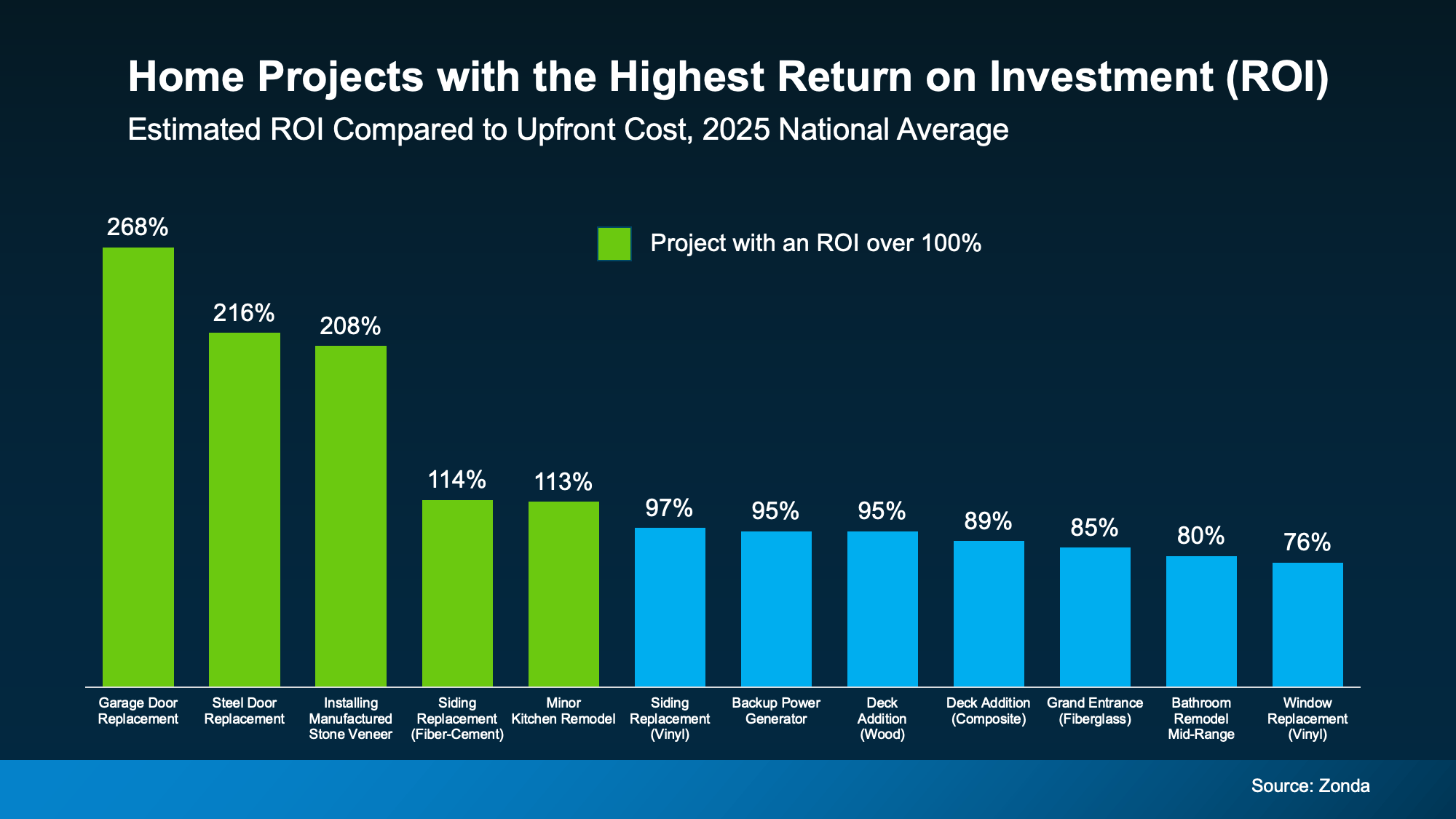
Which projects pay off most?
Each year, Zonda analyzes which home improvements deliver the greatest value at resale. And some of the top performers may surprise you.

The green sections in the chart below highlight the updates with the highest potential to boost your home’s value based on that research.


While the data includes a wide range of projects, what stands out most is that some of the top performers aren’t major renovations at all. In fact, a few of the biggest value boosters are as simple as replacing doors.

Small Updates, Big Visual Impact

This proves that even modest improvements can make a meaningful difference. You don’t need to spend a fortune or tackle every project on the list. But in today’s market, leaving things untouched can actually work against you.

With more homes available, buyers are naturally gravitating toward properties that feel move-in ready.

The best approach? Focus on what your home needs—whether it shows up in the data or not. That might mean finally handling those lingering repairs: a front door or shutters that need a refresh, leaves piling up in the yard, or scuffed paint in high-traffic areas where kids play. Those details matter more than you may think.

As interior designer and home stager Mallory Slesser shared with the National Association of Realtors (NAR):

“If you’re looking for affordable updates that pack a punch, dollar for dollar, I would say painting; changing out light fixtures; changing out hardware; maybe new draperies or window treatments. Those are all cost-effective ways to make a big statement. It really changes the space.”

These small, often overlooked details help buyers focus on the home itself—not the list of projects they think they’ll need to tackle after moving in. And for many sellers, that approach pays off. Buyers are often willing to pay more for homes that feel well-maintained, updated, and truly move-in ready.

This Chart Is a Starting Point, Not a Strategy

Here’s the key takeaway: national data like this is meant to be a guide—not a one-size-fits-all plan. Buyer preferences vary by location, price point, and even neighborhood. A project that adds value in one area could be unnecessary—or even excessive—in another.

That’s why your first step should always be a conversation with a local real estate professional before making any updates.

An experienced agent can help you determine:

  • Which updates buyers in your market expect

  • What you can skip without hurting your sale

  • Where a small investment will make the biggest impact

  • Whether it’s better to update or sell as-is

That kind of guidance helps you avoid both over-improving and under-preparing.

Bottom Line

If you’re planning to sell this spring, there’s still time to make strategic updates that help your home stand out—without taking on a full renovation.

Not sure where to start? Let’s talk through what makes the most sense for your home. A quick conversation can help you prioritize the updates that deliver the biggest return.


What’s one upgrade you’ve been debating—and wondering if it’s really worth it?

Posted in Home Selling Tips
Jan. 12, 2026

A Surge of Buyers Is Expected in 2026: How to Get Ready Now


Buyer Interest Is Picking Up—And That Matters

Momentum is slowly returning to the housing market. According to new data from NerdWallet, more Americans are beginning to think seriously about buying a home again. Last year, 15% of respondents said they planned to purchase within the next 12 months. This year, that number increased to 17%.

While a 2% rise may seem modest, in a market where buyer demand has cooled over the past few years, it’s a meaningful shift. It signals that more people are feeling financially and emotionally ready—or at least closer to ready—to make a move in 2026.

If buying a home is on your goals list this year, consider this your nudge to start conversations now with a trusted local agent and lender. Laying the groundwork early can make all the difference.


Planning To Move in Early 2026? Start With These 4 Steps

If you’re ready to take action, here’s where to begin:

1. Get pre-approved.
A pre-approval helps you understand your true buying power and what your monthly payment could look like at today’s rates. Just remember—most pre-approvals are valid for only 30–90 days, so this step is best taken when you’re ready to get serious.

2. Run the numbers.
Review your current expenses and map out a realistic budget. Factor in other monthly obligations alongside a future mortgage payment so you’re confident and not stretching yourself too thin.

3. Define your non-negotiables.
Once the numbers make sense, get clear on your must-haves—location, commute, layout, school district, lifestyle needs, and more. Clarity now makes decision-making much easier later.

4. Choose your agent early.
Read reviews, ask questions, and talk to more than one agent to find someone you trust and connect with. The right agent doesn’t just show homes—they help guide pricing, timing, strategy, and expectations well before you write an offer.


Buying Later in 2026? Now Is Still the Time To Prepare

Even if your move feels farther off, this is still your window to get ready. Buyers who feel the most confident later are usually the ones who prepared quietly ahead of time.

Preparation doesn’t have to mean major financial changes. Small, steady steps can go a long way:

  • Work on your credit. You don’t need perfect credit, but improving your score can positively impact loan terms and interest rates. Paying down debt and staying current on payments helps.

  • Automate your savings. Setting up automatic transfers to your home fund creates consistency and removes the temptation to spend that money elsewhere.

  • Lean into side income. Freelance work, part-time gigs, or a side hustle can give your savings a helpful boost.

  • Use unexpected cash wisely. Tax refunds, bonuses, or cash gifts can make a big difference when added to your home-buying fund.

The common theme? Thoughtful preparation pays off.


Bottom Line

If buying a home in 2026 is on your radar, now is the time to start the conversation. Not to rush decisions—but to make sure you’re prepared when the moment is right.

Every move is smoother when it starts with a plan. And if you’d like help creating one that fits your goals and timeline, let’s connect.

Jan. 9, 2026

What Makes the 2026 Housing Market Optimistic


If you’re thinking about moving in 2026, the outlook is brighter than it’s been in years.
After a period where many felt stuck, this year brings more balance, options, and clarity for buyers and sellers alike.
It’s not that the market is suddenly “easy”—but several key factors are shifting in your favor.

Here’s what the experts say you can expect.


Danielle Hale, Chief Economist at Realtor.com:

“After a challenging period for buyers, sellers, and renters, 2026 should offer a welcome, if modest, step toward a healthier housing market.”

The National Association of Realtors (NAR):

“Top economists have one word to sum up the housing market for 2026: opportunity. Lower mortgage rates and a rising supply of homes are expected to open up the housing market... something the real estate industry and potential home buyers and sellers have been waiting for, following three years of stagnation.”

Mark Fleming, Chief Economist at First American:

“. . . for the first time in several years, the underlying forces are finally aligned toward gradual improvement. Mortgage rates may drift down only slowly, but income growth exceeding house price appreciation will provide a boost to house-buying power — even in a higher-rate world. Affordability won’t snap back overnight, but like a ship finally catching a steady tailwind, it’s now sailing in the right direction.”

Mischa Fisher, Chief Economist at Zillow:

Buyers are benefiting from more inventory and improved affordability, while sellers are seeing price stability and more consistent demand. Each group should have a bit more breathing room in 2026.”
Why Local Insight Matters More Than Ever
The national outlook is improving, but local markets can vary. Some areas will see faster activity, others stronger price growth, and some may stay flat. As Lisa Sturtevant, Chief Economist at
Bright MLS notes: “Market performance will hinge on local economic conditions, making 2026 one of the most geographically divided markets we’ve seen in years.”
That’s why knowing your local market is crucial. National trends set the stage, but local dynamics shape what actually happens—making a knowledgeable agent essential.

Bottom Line:
If you want to understand what’s expected in our area and how to make the most of it, let’s connect.

Dec. 30, 2025

Is January the Best Time To Buy a Home?

You don’t have to put your home-buying plans on hold just because winter has arrived. While spring is often considered the “best” season to buy, recent data suggests that January may actually offer an advantage—especially for buyers who are mindful of their budget.

It may sound unexpected, but there’s a good reason January deserves attention.

1. Home Prices Are Often More Buyer-Friendly

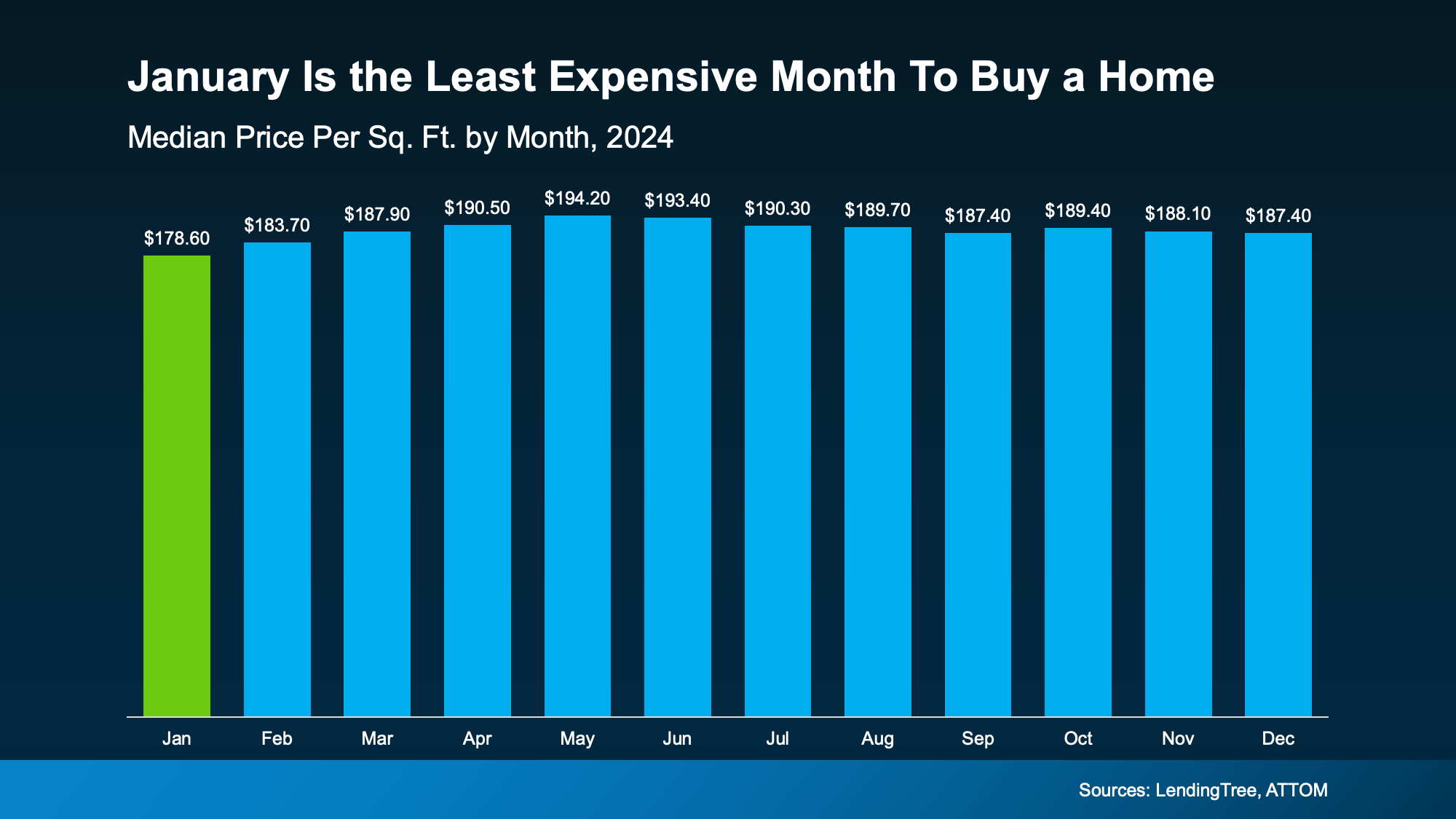
According to LendingTree, January is typically the most affordable month to purchase a home. Historically, homes sold during this time tend to have lower price-per-square-foot averages compared to other months. As the market moves into spring, buyer demand increases, which often drives prices higher. This pattern has shown up consistently over many years of housing market data.

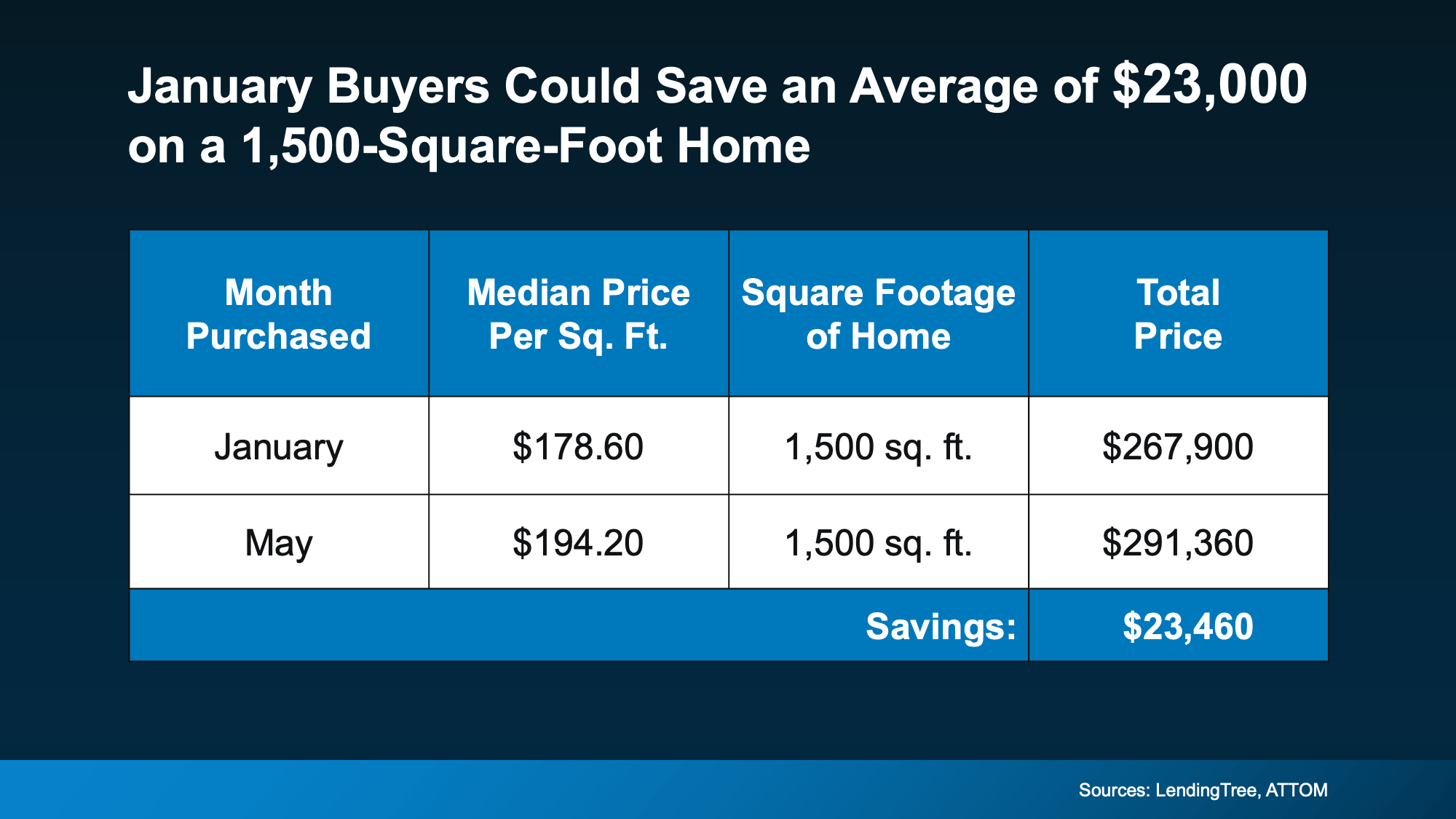
So what does that difference actually look like in real dollars? The numbers tell a compelling story. Based on the most recent full year of data, buyers who purchased a typical 1,500-square-foot home in January spent roughly $23,000 less than those who closed in May. This pricing gap isn’t a one-time anomaly—it’s a seasonal pattern that tends to repeat itself year after year, as illustrated in the chart below.


Of course, the exact savings will vary based on the home’s price, size, and type. Nevertheless, the overall pattern remains consistent. For today’s buyers, these seasonal price differences can translate into meaningful savings—especially at a time when affordability remains a challenge for many households.

2. Less Competition and More Willing Sellers

So why does winter often work in a buyer’s favor? Simply put, it’s one of the quietest periods in the real estate market. Many buyers and sellers step back, choosing to wait for the traditional spring rush. That slowdown creates several advantages:

  • Fewer buyers competing for the same homes

  • A lower chance of multiple-offer situations

  • Sellers who are more open to negotiation

  • More time to view homes and make thoughtful decisions

Winter doesn’t just reduce buyer activity—it also highlights sellers who are serious about moving. With fewer shoppers in the market, motivated sellers are often more flexible and realistic. As noted by Realtor.com, reduced competition can give buyers greater leverage, leading to opportunities such as closing cost assistance, repair credits, home warranties, or other concessions that can add up to thousands in savings.

That doesn’t mean every home will come with discounts, but it does mean buyers are more likely to be heard, respected, and given room to negotiate.

Do you think you should hold off until Spring?

Here’s the key takeaway: when you remove the urgency and competition that typically come with spring, it becomes easier to secure the right home at a price that aligns with your budget.

Waiting until spring usually brings more buyers back into the market, which can drive up prices and increase stress. While the best timing always depends on your personal situation, it’s worth reconsidering the idea that warmer weather automatically means better opportunities.

Buying in January often comes with three major benefits: less competition, the potential for lower prices, and more motivated sellers. Those advantages tend to fade once the spring market heats up.

Bottom Line

If you’ve been considering making a move, winter may offer more opportunity than you expect.

Wondering what buying in January could look like for you? Let’s review your numbers and explore the homes currently available in our local market.